AI and Democracy: Notes from Bruce Schneier’s keynote in Luxembourg
May 12, 2026 — Belval Campus, University of Luxembourg
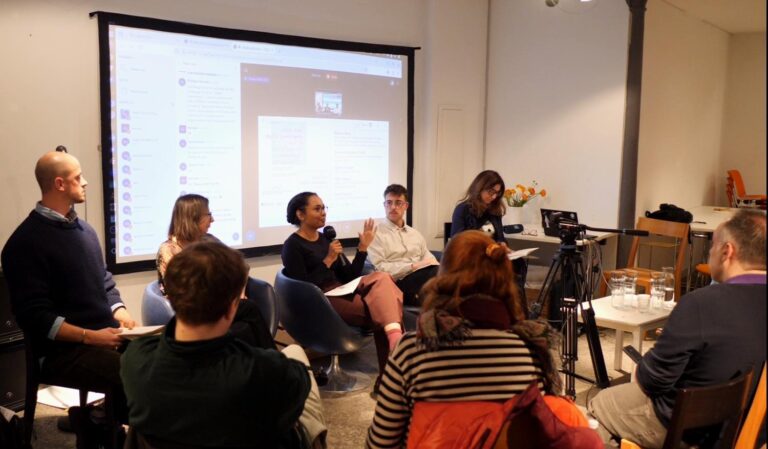
On May 12, I went to Europe at the Crossroads of AI, Power & the Future of Democracy1, an ICTLuxembourg event at the University of Luxembourg’s Belval Campus. Bruce Schneier gave the keynote. He’s a lecturer at Harvard Kennedy School and a Berkman Klein Fellow, and he’s been writing about technology and governance for decades. The talk drew on “Rewiring Democracy: How AI Will Transform Our Politics, Government, and Citizenship”2; a book he co-authored with Nathan Sanders last fall. I walked out thinking about it for the remainder of the day.
AI is already inside democratic processes
Schneier’s opening point was blunt: AI is not coming for democracy. It is already there. AI-translated campaign speeches in India’s 2024 elections. Deepfake campaign avatars in South Korea. The French and European parliaments experimenting with AI-drafted legislation. The technology is embedded in how politics actually works, at every level. It propagates messages, drafts regulatory text, and triages compliance documents faster than any human team, even when the output is wrong.
He framed this as a spectrum, not a single threat, and that is the part that stuck with me. He walked through use cases that were hard to argue with: AI platforms that transcribe city council meetings and make them searchable. Tools that help citizens draft comments to their legislators. Voting guides in Germany that explain party platforms before elections. These things work today. They lower the barriers to civic participation, which is close to what ISOC has always pushed for.
The concentration problem
Then the mood shifted. AI does not distribute power on its own. It amplifies whoever controls it. Schneier put it plainly: the same technology that helps a first-time candidate run for office can flood information environments with synthetic content at industrial scale. Courts, legislatures, and enforcement agencies are already using AI. Brazil’s judiciary is a leading example, and a cautionary one, where productivity gains have outpaced accountability.
For those of us in internet governance, the pattern is familiar. The architecture of a technology encodes values. An AI system built without transparency or public oversight will not become democratic just because someone deploys it in a democratic context.
Renovating democracy
Schneier did not argue for slowing AI down. He argued for renovating the democratic institutions that AI is now operating inside. He pointed to Apertus3, an ethical AI project from Switzerland, and Singapore’s multilingual public model. His position: AI should be treated as public infrastructure, with accountability to citizens rather than shareholders.
From an ISOC perspective, this lands on ground we already work. Multistakeholder participation, open standards, human rights: these are the principles we apply to internet governance, and they need to govern AI too. The Luxembourg event was a reminder that this conversation is moving fast, and that Europe is where the hardest governance choices are being made right now.
I attended this event as part of ISOC Switzerland Chapter’s engagement with digital sovereignty public policy sessions and social impact policy work.
1 https://www.ictluxembourg.lu/2026/05/04/bruce/ ↩
2 https://direct.mit.edu/books/book/6042/Rewiring-DemocracyHow-AI-Will-Transform-Our ↩
3 https://fr.wikipedia.org/wiki/Apertus ↩