What does digital sovereignty mean for … policy makers, educators, civil society, YOU?
In 1996, at the annual gathering of the World Economic Forum in Davos, a libertarian manifesto rang out across the early web. John Perry Barlow’s “Declaration of the Independence of Cyberspace” imagined a realm beyond the reach of governments—weightless, borderless, self-governing.
Three decades later, the mood has shifted.
In 2026, the question that was asked in Davos is no longer whether cyberspace is independent, but whether Europe can claim its own share of it. “Is Europe’s digital sovereignty feasible?” —an admission that sovereignty, once dismissed as obsolete in the digital age, has returned with force. In Brussels, Ursula von der Leyen elevates the concept in her agenda for Europe. The Digital Services Act asserts regulatory authority over global platforms. And in Bern, the Digital Switzerland Strategy 2026 places digital sovereignty at the heart of the country’s technological future.
The idea of openness that we took for granted is now out of the window as the world is rapidly getting more confrontational.
Geopolitical instability has exposed supply chains once thought secure. Artificial intelligence systems proliferate faster than institutions can comprehend them. Social media platforms shape public discourse at a scale no parliament or newspaper ever commanded. What was once an abstract ideal—control over one’s digital destiny—has become a strategic imperative.
But in the rush to define and reclaim sovereignty, three uncomfortable questions loom—rarely addressed, often postponed.
First: sustainability. Digital transformation is not ethereal. It consumes energy, rare earths, water, and land. Sovereignty in the cloud is still grounded in physical infrastructure.
Second: health. The same networks that promise empowerment also entrench dependency. Internet addiction, algorithmic amplification, and perpetual connectivity threaten mental health in ways policymakers are only beginning to quantify.
Third: resilience. As societies entrust essential services—communication, finance, education, health—to digital systems, vulnerability deepens. Physical disasters, cyberattacks, and systemic failures no longer threaten convenience alone; they threaten continuity.
It is in this context that the Switzerland chapter of the Internet Society — member also of the Network for a Sovereign Digital Switzerland and communication partner of the NGI0 Commons Fund project — steps into the debate with a deceptively simple question: What does digital sovereignty mean?
Not as a slogan. Not as a regulatory instrument. But as a lived reality—for policymakers, educators, civil society, and above all, citizens. Respecting key values like openness, privacy, and democracy.
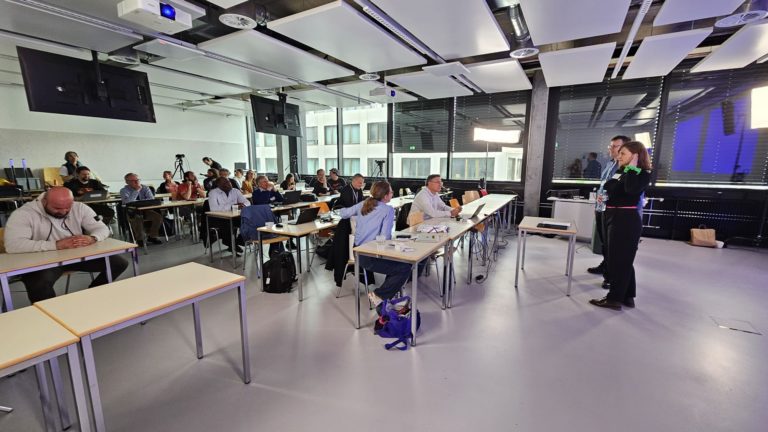
On March 27th, 2026, through a public event with special guests from European civil society organizations, ISOC-CH launches a long-term campaign to examine that question publicly—placing sustainability, health, resilience, openness, privacy, and democracy at its core. And on April 25th, at Open Education Day, it will extend the inquiry to the classroom, asking what digital sovereignty demands of those who shape the next generation.
Because sovereignty in the digital age is not declared once and for all. It is negotiated—line by line, protocol by protocol, value by value.
The Internet Society (ISOC) Switzerland Chapter is a non-profit organization that engages on a variety of Internet-related topics, ensuring that it is a place of possibility, opportunity, and progress that benefits people worldwide. We provide technically-grounded advice, policy recommendations, and educational material regarding privacy, security, Free and Open-Source Software, and digital sovereignty. We also organize informative events and debates like the annual Public Policy Sessions and participate in collaborative research projects like the NGI0 Commons Fund.
As a national chapter of the international organization responsible for the .org domain, ISOC CH acts as a gateway between Switzerland and the international digital civil society.
You can consider becoming a member (through the main ISOC web site) following the instructions at https://isoc.ch/membership, or just subscribe to our newsletter (2-3 announcements per year) by sending a message to contact@isoc.ch.